Arision Treatment CenterWarner Center · Los Angeles CountyPHP · IOP · OP
Real treatment by day. Your own bed every night.
ConfidentialNo cost to callPPO plans onlyAnswered 24/7
★★★★★4.9 on Google44 reviewsLooking for outpatient treatment in Woodland Hills? Arision Treatment Center has three levels of outpatient care for adults. There's PHP, which is partial hospitalization. There's IOP, the intensive outpatient program. And there's OP, standard outpatient care. Arision is owned by people with lived experience of addiction and recovery, and about half of our staff are in recovery too.
Recovery rarely moves in one leap. So Arision offers three levels of outpatient care, and you can move between them as you get stronger. You keep the same team the whole way down. A typical stay is about 90 days across the three levels, and your needs, not a calendar, decide when you move. The levels come from the ASAM Criteria, the national guide doctors and insurers use to match people to care.
ASAM 2.5 · Partial hospitalization
5 days a week · 9am–3pm
The fullest day we offer. It fits people fresh out of detox or residential care, and people whose symptoms need daily attention. You're with us most of the weekday, then home by mid-afternoon. ASAM's newest edition calls this level “high-intensity outpatient.”
Who you see each week ↓ About PHP →ASAM 2.1 · Intensive outpatient
5 days a week · 9am–3pm
The step after PHP. Same five days, lighter load. The intensive outpatient program fits people who are steadier and ready for more independence. You see your case manager once a week instead of up to three times.
Who you see each week ↓ About IOP →ASAM 1 · Outpatient
1–5 days a week · 9am–3pm
One to five days a week, set by your needs. OP keeps you connected once daily structure isn't needed, and it's the level that fits best around work or school. Most people step into OP after IOP. ASAM's newest edition calls this Level 1.5, outpatient therapy.
Who you see each week ↓ About outpatient →Detox and live-in care. If you drink or use daily, stopping cold can be dangerous, especially with alcohol or benzodiazepines. Our admissions team screens for that on the first call. If withdrawal care comes first, they'll point you to a licensed detox, and your outpatient spot can be planned for the day you finish.
Step down, not drop off.
The same team walks every step with you.
Arision is owned by people with lived experience of addiction and recovery. About half of our staff are in recovery, too. So the person across the room often knows what the first weeks feel like, because they've lived them. That shapes how we run outpatient treatment in Woodland Hills.
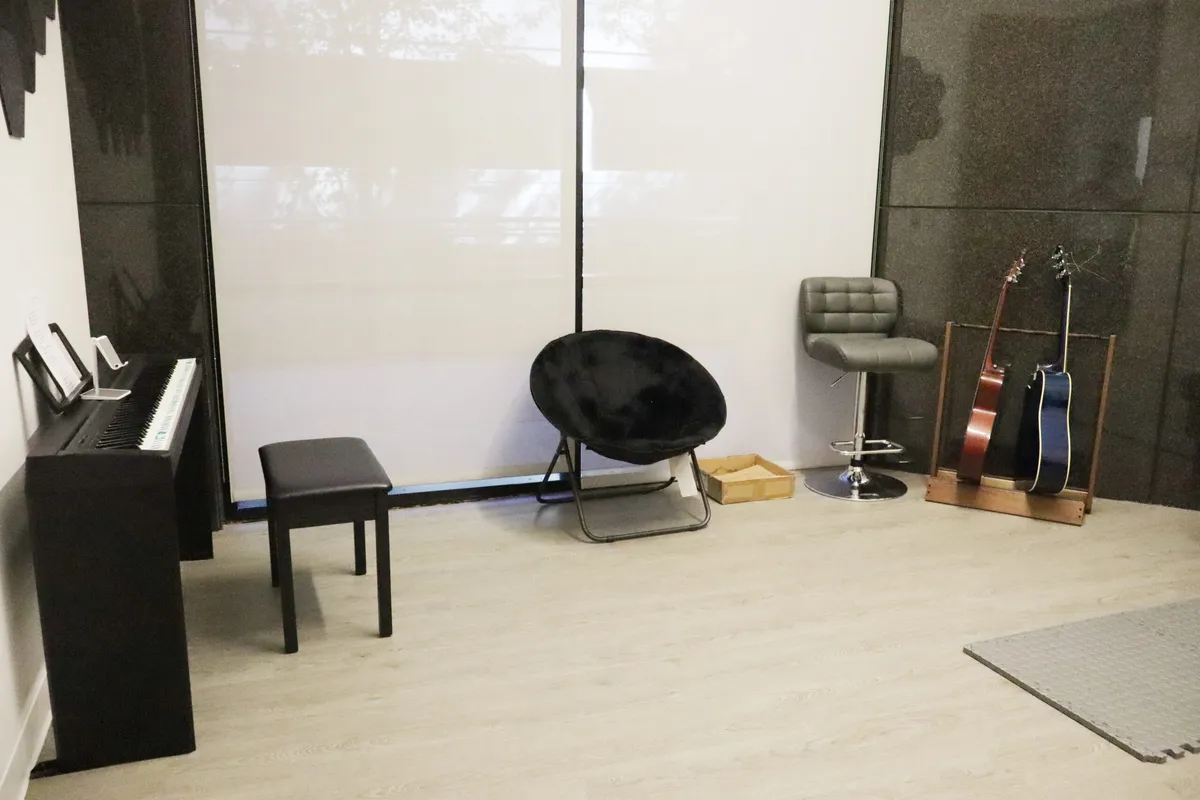
You can see it in the small choices. There's a lounge instead of a waiting room, a music studio, a courtyard for breaks, and a schedule that sends you home every afternoon.
Lived experience doesn't replace clinical care. Our credentialed clinical and medical team leads your treatment. The state, The Joint Commission and LegitScript all review how we work. Having been there is why we take those standards so seriously. Every plan starts with one question: what do you need right now?
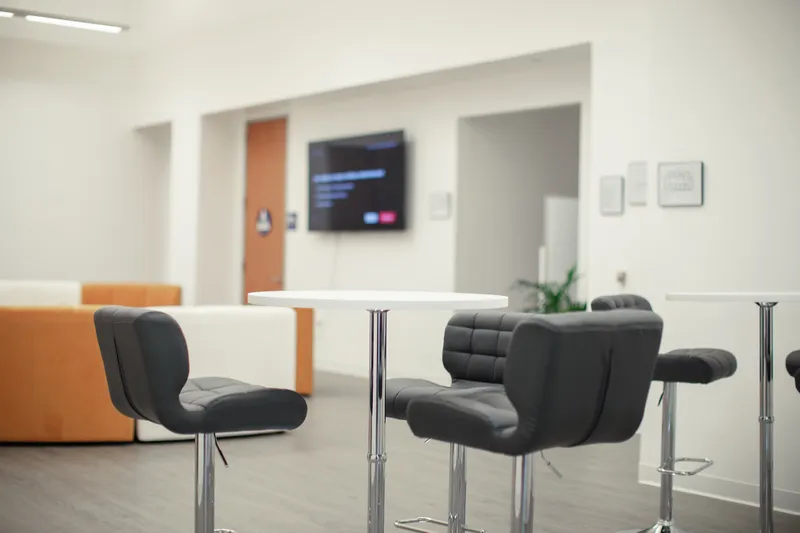
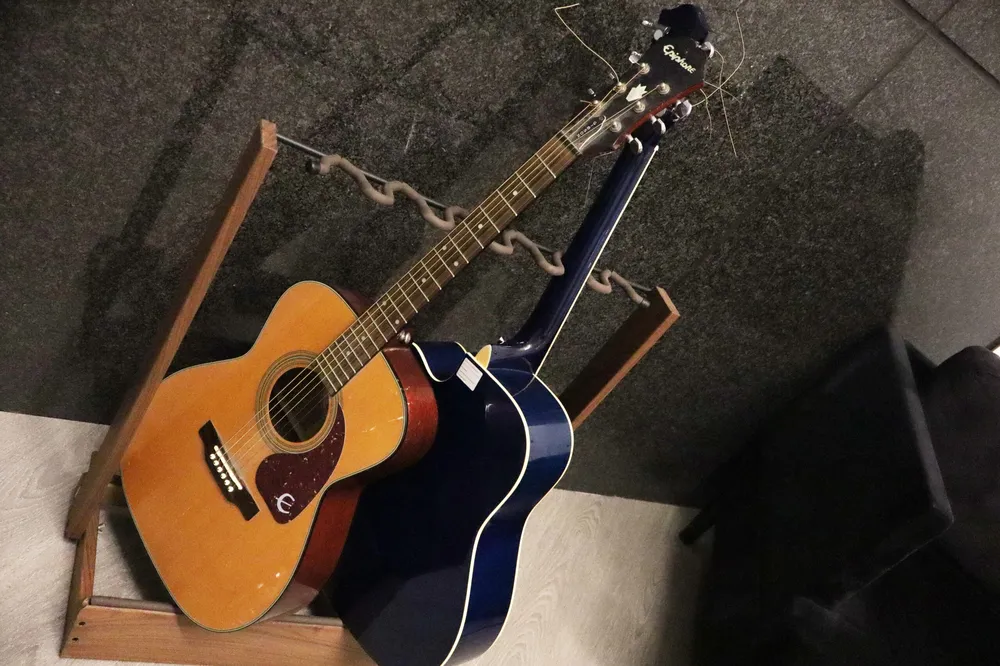
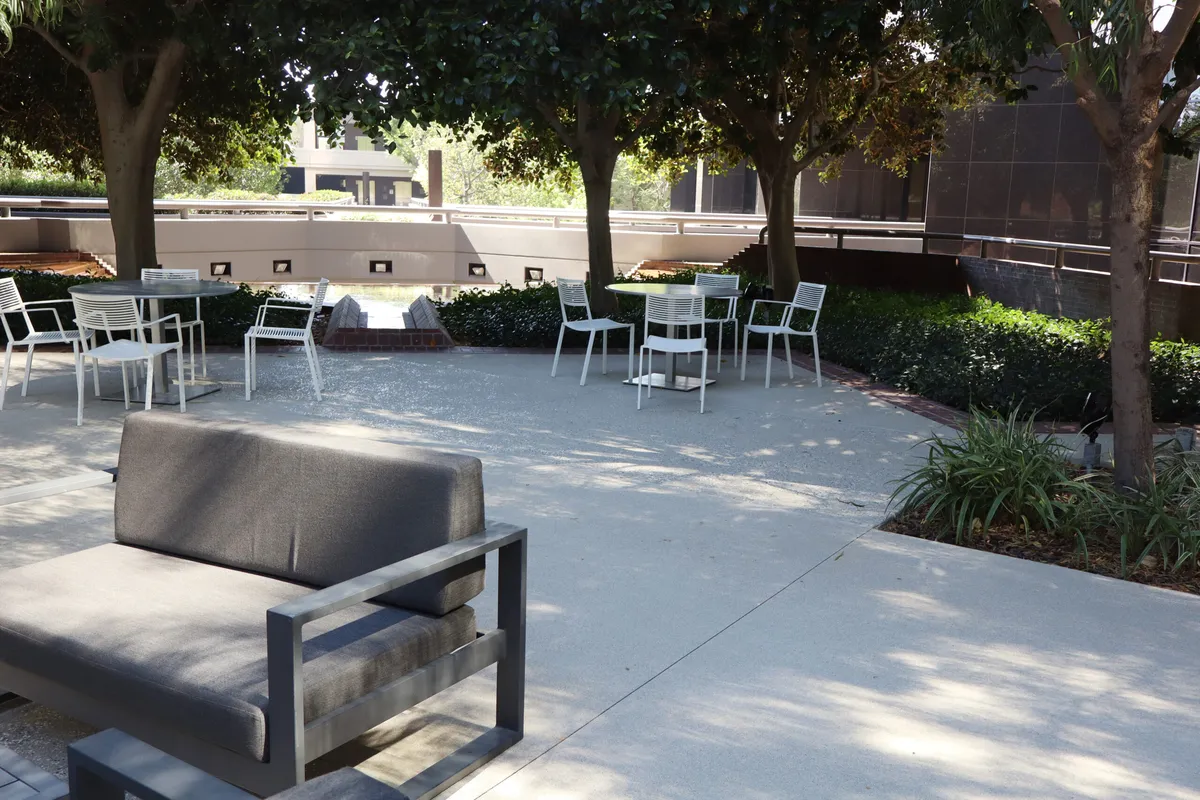
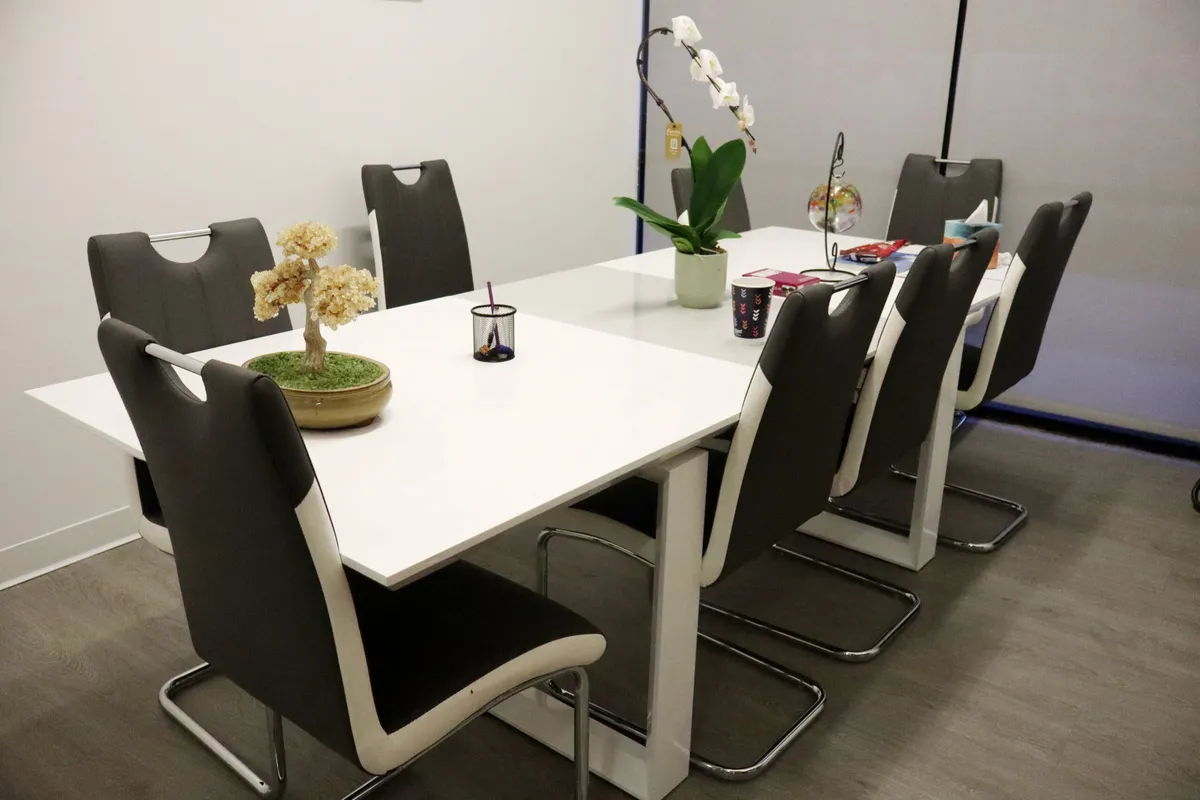
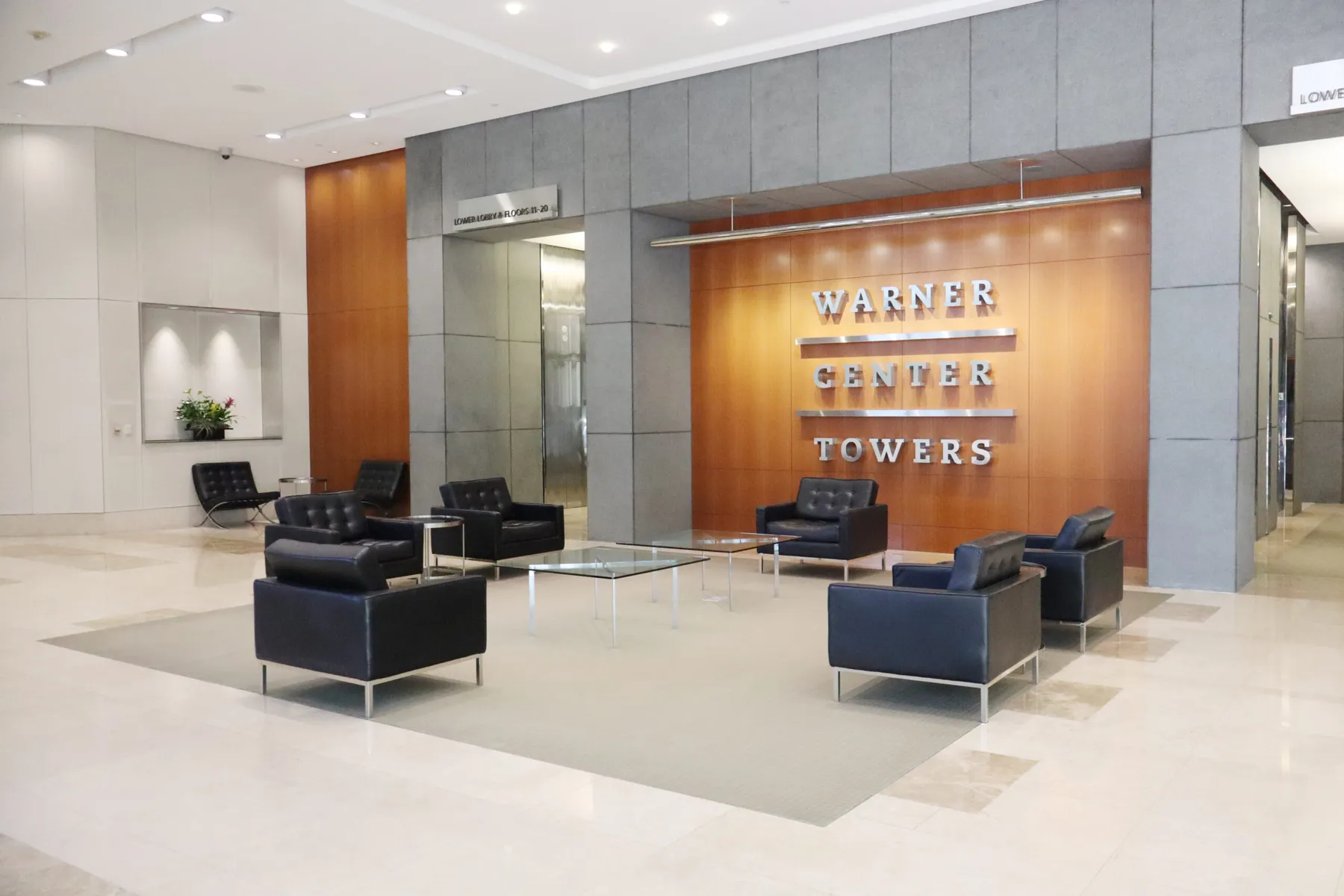
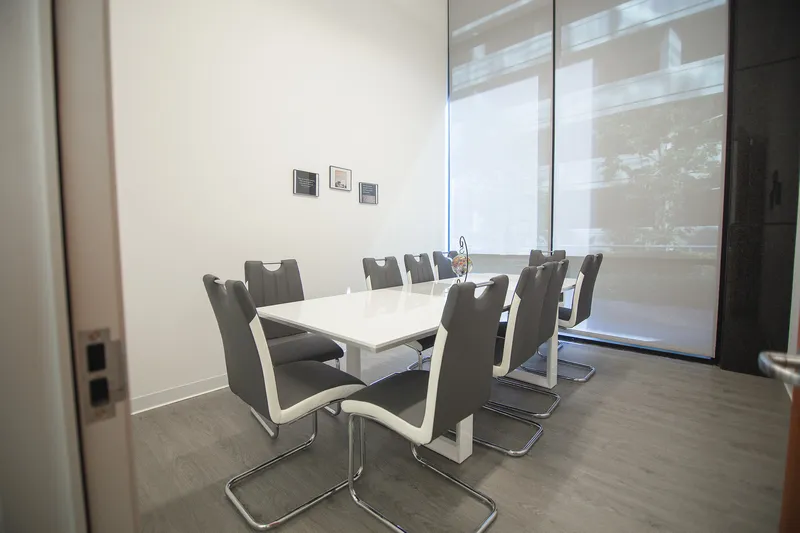
Our actual rooms on the second floor of Warner Center Towers. No stock photos. No clients pictured.
The people behind Arision
These are some of the people you’ll work with at Arision. A doctor, a psychiatrist, therapists and case managers lead your care.
Meet the leadership team →
Care team

George PztikyanProgram DirectorOversees the program day to day, from the schedule and groups to the team that runs them.
Rafael LopezCase ManagerHelps with the practical side, like paperwork for work or school and lining up what comes after.
Works with clients in one-on-one therapy and groups, under a licensed clinical supervisor.
Leads the tech team and supports clients through the program day.
Supports clients through the program day, from check-in to the last group.
Leadership

Runs day-to-day operations, compliance and records, so Arision works inside its legal and ethical lines.

Runs financial operations and regulatory compliance, keeping the program steady for the people who rely on it.

Request a tour → Tours on request · call or email info@arisiontreatmentcenter.com
If you're here for yourself
Plenty of people who reach out to Arision still clock in every morning. From the outside, life looks handled. Inside, the drinking or using has become the thing holding it together, and that's exhausting.
Does this sound familiar?
If you nodded along, you're not weak and you're not alone. An outpatient program lets you get serious care on weekdays and still go home each afternoon.

What you're using, how it's been going, and what else is weighing on you: sleep, mood, panic, grief. No judgment and no script to follow.
Every client starts in PHP, then steps down. Our admissions staff tells you if that's the right fit, or why detox or another program should come first. Even when that means it isn't us.
If you'd like, we look up your plan's benefits and walk through likely costs before you commit to anything.
No stable place to live?
Tell our admissions team on your first call. We'll talk through safe housing options for while you're in treatment, so where you sleep doesn't stand between you and care.
What we can help with →One conversation won't fix everything.
It does end the guessing.
If you're here for someone you love
Parents, partners, siblings and adult children reach out to Arision long before their person is ready. That's a good instinct. The sooner you understand the options, the calmer you'll be when a window opens.

Does this sound familiar?
That refusal is where outpatient care changes things. With PHP, IOP or OP, treatment happens during the day and they sleep at home every night. For many people, that's a yes they couldn't give before.

One bad night isn't a diagnosis. A pattern is: sleep that's upside down, cash that disappears, promises that keep breaking, friends who vanish, and a short fuse when anyone asks.

A method called CRAFT has research showing it helps families bring a loved one to treatment. You reward sober time, let the natural results of using land, and ask when things are calm. Al-Anon and Nar-Anon can support you, too.

Unresponsive, blue lips, a seizure or slow breathing: dial 911. Talk of ending their life: call or text 988. If fentanyl or pills could be involved, keep naloxone (Narcan) in the house. California pharmacies sell it without a prescription.
Once they're in care, you can join family sessions, as often as once a week, if they agree and you ask for them. Federal law keeps their treatment private, so our team needs their signed consent before sharing details with you. We'll offer them that form at intake.
Their readiness isn't yours to force.
Your own steadiness is yours to build.
Here's a real PHP day of outpatient treatment in Woodland Hills, start to finish. IOP keeps the same five-day schedule with a lighter clinical load, and OP meets one to five days a week. Your own plan is written with you after your assessment.

9:00
Walk in, grab coffee and breakfast, and settle in. Nobody gets rushed straight into a group.

First group · about 1 hr
A lively first hour of questions that gets everyone's brain awake and talking.

10:00 · 20 min
Stretch, step outside to the courtyard, refill your coffee.

10:30 · 1.5 hrs
A longer group with a new facilitator, and a new angle on what you're working through.

Afternoon · 1.5–2 hrs
Mostly process groups: real talk about what's happening in your life and your recovery. Up to three facilitators can lead one.

3:00
You head home, try the day's skills in real life, and bring back what happened tomorrow.

Your one-on-one therapy
You meet your therapist one or two times a week, on different days. A session can run as long as three hours when the work calls for it. That's where you dig into what fuels the use, with methods like motivational interviewing. You also see a doctor each week, and a psychiatrist when you need one.
Your care team, week by week




| Who you see | PHP | IOP | OP |
|---|---|---|---|
| Days per week | 5 | 5 | 1–5 |
| Doctor | Once a week | Once a week | Once a week |
| Therapist (one-on-one) | 1–2 times a week | 1–2 times a week | Once a week |
| Case manager | 1–3 times a week | Once a week | Once a week |
| Psychiatrist | As needed | As needed | As needed |
Groups fill the rest of each program day. A different facilitator leads each one. Your case manager helps with the practical side, like paperwork for work or school, and lining up what comes after.
After 3pm
This is the advantage of outpatient care. The skills get tested the same evening, in your kitchen, your commute and your group chat. Then you have people to debrief with the next morning.
Before you finish, you and your therapist plan what comes next. You might step down from PHP to IOP to OP. After you finish, you might see an outside therapist or join Arision's alumni group. Many people also go to AA, NA or SMART Recovery.


Google reviews
4.9out of 5
43 of 44 Google reviews give Arision five stars
Checked October 2026
“The staff are amazing and treat you as family.”Randy C. · Google review
For families
Trusting Arision with a family member at their most fragile: individual clinical care, owners who stay involved, and clean, comfortable homes.
Read Becky's full review ↗The care
Compassionate care in a professional setting, and staff who go above and beyond for each client.
Read Matthew's full review ↗The program
A knowledgeable, compassionate team, and well-structured days that mix group sessions, therapy and one-on-one counseling in a calm, welcoming space.
Read Roger's full review ↗Dual diagnosis
Treatment tailored to each person inside a family-style group, with help for depression, PTSD and trauma, and real discretion.
Read Daryl's full review ↗Mental health
Staff who made sure mental health and self-care were covered, and who helped redirect old ways of thinking toward personal goals.
Read Meloney's full review ↗Community
A community that feels like home, and people who want to see you succeed, whether you're getting sober or just struggling day to day.
Read Sheila's full review ↗For families
Trusting Arision with a family member at their most fragile: individual clinical care, owners who stay involved, and clean, comfortable homes.
Read Becky's full review ↗The care
Compassionate care in a professional setting, and staff who go above and beyond for each client.
Read Matthew's full review ↗The program
A knowledgeable, compassionate team, and well-structured days that mix group sessions, therapy and one-on-one counseling in a calm, welcoming space.
Read Roger's full review ↗Dual diagnosis
Treatment tailored to each person inside a family-style group, with help for depression, PTSD and trauma, and real discretion.
Read Daryl's full review ↗Mental health
Staff who made sure mental health and self-care were covered, and who helped redirect old ways of thinking toward personal goals.
Read Meloney's full review ↗Community
A community that feels like home, and people who want to see you succeed, whether you're getting sober or just struggling day to day.
Read Sheila's full review ↗Clients and their families wrote these reviews on Google. The short summaries are ours. Tap a link to read the full review. Every person's experience is different, and no result is promised.
Panic that a drink calms down. A low mood that pills lift for a while. When a mental health condition and substance use feed each other, it's called a co-occurring disorder, or dual diagnosis. Arision is first an addiction treatment program. Our dual diagnosis care treats the mental health side in the same plan, so neither one keeps undoing progress on the other.
How the loop works
Dual diagnosis care works on both sides of the loop at once.
This is common, not rare. SAMHSA estimates about 21.2 million U.S. adults had both a mental illness and a substance use disorder in 2024. The National Institute on Drug Abuse advises treating the two together.
Next · Insurance ↓PPO plans our clients have used
We're out-of-network with every one of them. Your exact policy decides what's covered, which is why anyone who calls can get a free benefits check. Insurer names are trademarks of their owners.
Arision is out-of-network with every insurer, and we bill your insurance directly. Many PPO plans cover out-of-network outpatient care. Your part is the cost-sharing your plan sets, and nothing more.
Sample · your benefits summary from Arision
For illustration. Each plan sets its own amounts.
Who we can and can't accept
On Medicare, Medi-Cal or an HMO? We're not the right fit. For Medi-Cal, LA County's helpline answers 24/7 at 844-804-7500. For any plan, try FindTreatment.gov.
Federal parity law says most plans can't cover addiction treatment more narrowly than other health care.
Private · No cost · No commitment
Someone from admissions phones you with what your plan covers.
Loading the form… or call (747) 320-9575.
We can't accept Medicare, Medi-Cal or HMO plans. For Medi-Cal, LA County's helpline answers 24/7 at (844) 804-7500.
Please don't include health details here. We'll cover them by phone. Handled under HIPAA and 42 CFR Part 2. Rather talk it through? (747) 320-9575.
If you're referring a client

Clinicians, EAPs and case managers send us adults who need a set outpatient schedule. Some also have a mental health diagnosis. What referrers usually ask is on this page. Each credential below links to its public record.
Step-down handoffs
Discharging from detox or residential care? Phone before the discharge date so the assessment, benefits check and start date line up. Gaps in care are where people most often slip.
One clinical team
While clients attend, Arision's own team gives all their care. That means therapy, the doctor and psychiatry. With consent, we send records back to you. Then you pick back up after discharge.
Arision's three levels sit inside the gold band. With a signed 42 CFR Part 2 consent, you get updates at admission, during care and at discharge.
The referral, start to finish
Any hour, any day: (747) 320-9575
Whether our program, which starts in PHP, fits, or the higher level your client needs first. You hear it straight.
An out-of-network PPO check, finished before admission
Set before your client leaves their current program, so there's no gap
Shared with you once your client signs a 42 CFR Part 2 consent
Helpful to send with a referral
Please send substance use records only with your client's written consent, as 42 CFR Part 2 requires.
Readiness doesn't keep office hours. Neither does our admissions line.
Every badge above opens its government or accreditor record in a new tab.

With repeated use, the brain's reward and stress systems adapt. Cravings are learned signals, not character flaws, and learned signals can be retrained.
The National Institute on Drug Abuse says relapse happens at about the same rate as with asthma or high blood pressure. A setback means the plan needs a change. It doesn't mean you failed.
A review of intensive outpatient studies found results comparable to inpatient care for many people who don't need medical withdrawal care or 24-hour supervision.
Every group attended and every craving ridden out strengthens new habits. Your choices aren't the cause of the illness, but they're a big part of the way through it.
Your brain learned its way here.
It can learn its way forward.
NNorth
West Hills · Canoga Park · Winnetka · Chatsworth · Porter Ranch
EEast
Tarzana · Reseda · Encino · Sherman Oaks
WWest
Calabasas · Agoura Hills · Westlake Village · Thousand Oaks
SSouth
Topanga · Malibu · Pacific Palisades
Outpatient treatment in Woodland Hills means you make the trip several times a week, so distance matters. Arision sits in Warner Center at 21600 Oxnard Street, close to the 101 and Topanga Canyon Boulevard. People come from all over the west San Fernando Valley and the Conejo Valley.
21600 Oxnard St, Suite 270
Woodland Hills, CA 91367
Choosing a level
An IOP is set addiction treatment you go to during the day while you live at home. IOP stands for intensive outpatient program. Doctors and insurers call it ASAM Level 2.1. It's more than weekly therapy, and less than partial hospitalization. Most IOPs mix group therapy and one-on-one counseling. You also learn how substances change the brain, and skills to cope and avoid relapse. Many bring in family, too. SAMHSA publishes a full federal guide to how IOPs work. At Arision, our IOP in Woodland Hills meets five days a week, 9am to 3pm. It often follows PHP, detox or a live-in program.
They differ in how much support you get. PHP, a partial hospitalization program, is the most structured, with the most case-management contact. IOP, the intensive outpatient program, keeps the same five-day schedule with a lighter clinical load. OP, standard outpatient, meets one to five days a week, based on your needs. At Arision, all three meet between 9am and 3pm, and you live at home in all three. National ASAM guidelines call them Level 2.5, Level 2.1 and Level 1.
Outpatient treatment, or OP, is the lightest level of care Arision offers. You come in one to five days a week, between 9am and 3pm, depending on your needs. You see a doctor, a therapist and a case manager weekly, and a psychiatrist when needed. OP suits people whose daily life is fairly stable. It also fits people finishing IOP who still want steady support. If things get harder, you can step back up to intensive outpatient care.
It depends on your level of care. PHP and IOP both meet five days a week, from 9am to 3pm, so most people with daytime jobs take time off during those levels. The federal Family and Medical Leave Act and California's CFRA may protect your job while you do. OP meets one to five days a week, so it's the level that fits best around work or school. Many people plan a return to work as they step down to OP. Tell us your schedule on the first call, and we'll help you plan.
A typical stay at Arision is about 90 days. Most people move from PHP to IOP to OP over that time. That matches the research: the National Institute on Drug Abuse reports that most people need at least three months of treatment to cut back or stop, and longer care tends to work better. Your needs set the pace, not the calendar. Your team reviews your plan often, so you step down when you're ready and stay longer if you need to. Your insurance may also review the length of care, and we walk you through that.
It depends on where you are right now, and we'll always put your safety first. Is someone intoxicated, using every day, or likely to go into withdrawal? Then they need medical detox or a higher level of care first. The same is true if home isn't safe or there's a risk of self-harm. Once a person is sober and medically stable, outpatient care is the right fit for many adults. A review of intensive outpatient research found results close to inpatient care for people who don't need detox or all-day care. Our admissions team uses the ASAM Criteria to decide, and we'll tell you plainly if you need more than we offer.
Getting started
Tell your team right away. A slip doesn't erase your progress, but everyone's safety comes first. We never keep someone in program while they're actively using. Every client deserves a safe, sober group. If you're intoxicated or going into withdrawal, you'll most likely be asked to complete detox first. Our team helps line it up and plans your return once you're stable. For an overdose, a seizure or thoughts of harming yourself, staff call 911 or connect you to crisis care. Relapse rates are similar to other chronic illnesses, says the National Institute on Drug Abuse. So when you come back, your plan changes to give you more support.
It depends on what you use and how much. Suddenly stopping alcohol or benzodiazepines after heavy daily use can cause dangerous withdrawal, even seizures. Arision doesn't provide detox. On the first call, our admissions staff asks a few screening questions. If you need medical detox, they'll help you find a licensed program. Then they'll plan your outpatient start date for right after. If someone is seizing, can't be woken or is struggling to breathe, dial 911 now.
Day one begins with an assessment. A clinician asks about your substance use, physical and mental health, goals and daily responsibilities. You'll review privacy and consent forms, see the rooms, and sit in on a group so the format feels familiar. Feeling on edge is normal, and our team expects it. Early in your care, you and your team write your treatment plan together. Bring a photo ID, your insurance card and a list of current medications.
It depends on your level of care. PHP and IOP meet five days a week, and OP meets one to five days. In every level, you see a doctor once a week and a psychiatrist when you need one. In PHP, you also see your therapist one or two times a week and your case manager one to three times a week. In IOP, it's your therapist one or two times a week and your case manager once a week. In OP, you see your therapist and case manager once a week each.
Arision is owned by people with lived experience of addiction and recovery. About half of our staff are in recovery, too. They built the program they would have wanted: a calm space in Warner Center, weekday care so you sleep at home every night, and three levels of care with one team. A credentialed clinical and medical team provides the care. California's Department of Health Care Services certifies it as an outpatient program. The Joint Commission accredits it, and LegitScript certifies it.
Yes. Tours are available on request. You, a family member or a referring professional can see the lounge, group rooms, studio and courtyard before deciding. To keep clients' privacy, tours are scheduled ahead of time. Call (747) 320-9575 any time, day or night, or email info@arisiontreatmentcenter.com. Our team will set a time during program hours.
Tell our admissions team on your first call. Many people start outpatient care while their housing is uncertain. We'll talk through safe options for where to stay while you're in treatment, such as a sober living home. That's a substance-free house where residents support each other's recovery. LA County's 211 housing help line is another free place to start. Your clinical needs decide your level of care, and housing never changes that.
Cost & insurance
Many PPO plans do. Arision accepts PPO plans only. We can't accept Medicare, Medi-Cal or HMO plans. We bill your insurance company directly for your care. Your part is the cost-sharing your plan sets, such as a copay, and we tell you that amount before you start. We never bill you for anything above what your plan allows. We check your benefits at no cost, so you know what to expect.
It means Arision has no contract with your insurance company. Many PPO plans still cover outpatient care from out-of-network programs like ours. We send the claims to your insurer, and your plan decides what it pays. Your part is the cost-sharing your plan sets. We never bill you the difference above what your plan allows. Some plans must approve PHP or IOP first, and we handle that request. Federal parity rules stop most plans from covering addiction treatment more narrowly than other medical care.
No. Arision can't accept Medicare, Medi-Cal or HMO plans. We work only with PPO policies that include out-of-network coverage. We'd rather tell you now than after you've made the call. If you have Medi-Cal, LA County's Substance Abuse Service Helpline connects you to covered care, 24/7, at 844-804-7500. With Medicare or any other plan, you can search FindTreatment.gov or call SAMHSA's free helpline at 1-800-662-4357.
Privacy & credentials
Not from us without your written permission. Your treatment records have two layers of federal protection: HIPAA, and a tougher rule for substance use care called 42 CFR Part 2. Arision won't confirm you're a client to your boss, your family or anyone else unless you sign a release. The rare exceptions include a medical emergency. If you need time off, you decide what to share. Your employer may ask for a medical form for leave, and our staff can help you fill it out.
Every credential is public. California's Department of Health Care Services lists Arision as a certified outpatient (nonresidential) program, #191236AP, valid through May 31, 2027. The Joint Commission lists Arision Inc. under HCO ID 698018 for behavioral health care. The federal NPI registry lists Arision, Inc. as provider 1790475036. LegitScript certifies Arision as an addiction treatment provider. Links to each lookup appear on this page. Checking any program's records before you choose it is a smart habit.
For families
Start by reaching out for yourself. Families can talk with Arision's admissions staff before their person agrees to anything. Learn the options, then choose a calm, sober moment to bring it up. Describe specific things you've seen, and say why you're scared, without labels or ultimatums. The CRAFT approach teaches these skills and has research behind it. Outpatient care often lowers resistance, because your loved one sleeps at home every night.
Don't treat one no as the final answer. Adults in California generally can't be required to attend outpatient treatment, but readiness changes. Stop shielding them from the fallout of their use, keep your limits steady, and repeat your offer when they're more open. Get support for yourself through Al-Anon, Nar-Anon or a family therapist. Arision's team is glad to talk it through anytime. If they're in physical danger, dial 911. If they mention suicide, call or text 988.
Yes, with your loved one's agreement. Family sessions can happen as often as once a week when you ask for them. They help everyone learn how addiction and mental health conditions work, and how to support recovery at home. Because of federal privacy rules, our team can share details about your loved one only after they sign a consent form. Many clients sign one. Even without it, staff can listen to your concerns, give general information, and connect you with support of your own.
For referral partners
Call admissions at (747) 320-9575, around the clock, every day. Share the basics: substance use history, mental health needs, current level of care and insurance. We accept PPO plans only, not Medicare, Medi-Cal or HMO plans. We'll say whether PHP, IOP or OP looks appropriate, or whether a higher level should come first, and how soon an assessment can happen. For clients leaving detox or residential care, call before the discharge date. Arision does not pay for or accept payment for referrals.
Arision offers three outpatient levels. Level 2.5 is our partial hospitalization program. ASAM's 4th edition now calls it high-intensity outpatient. Level 2.1 is intensive outpatient. Level 1 is standard outpatient. The 4th edition names it Level 1.5, outpatient therapy. All three treat mental health needs that come with substance use. We don't offer detox, live-in care or a psych hospital stay.
Yes, once your client signs a consent that meets 42 CFR Part 2, the federal rule protecting substance use treatment records. With that consent, we can report admission, attendance, progress and the discharge plan. Without it, the law doesn't let us confirm the person is enrolled. Our intake staff offers the consent form during the first session, so updates can start right away.
Not while they're enrolled. During PHP, IOP or OP, clients see Arision's own clinical and medical team for therapy, the doctor and psychiatry, so one team owns the plan and the medicines. Outside providers can pick back up after discharge. With your client's signed consent, we share the discharge plan and records, so you know exactly where they left off.
You don't need to have decided anything to reach out. Ask about outpatient treatment in Woodland Hills, about costs, or about someone you're worried for. The conversation is confidential and costs nothing.
Admissions · 24/7
(747) 320-9575Follow Arision
General education only; not a substitute for medical advice.
Overdose, seizure or any medical emergency: dial 911.
Thoughts of suicide or emotional crisis: call or text 988.
SAMHSA's free, confidential National Helpline: 1-800-662-4357.