Admissions open 24/7 Certified by California DHCS Warner Center · Woodland Hills, CA For families Refer a client Call (747) 320-9575

Arision Treatment CenterWarner Center · Woodland HillsIntensive outpatient · ASAM 2.1

Intensive Outpatient Program IOP in Woodland Hills The step after PHP

Structured days, steadier footing, home by 3pm.

Admissions 24/7ConfidentialPPO plans onlyIn person

Arision’s IOP in Woodland Hills is an intensive outpatient program for adults. It meets five days a week, 9am to 3pm, in Warner Center. It’s the step after our partial hospitalization program (PHP).

01What IOP is

What an intensive outpatient program is

An intensive outpatient program, or IOP, is set treatment for addiction that you go to during the day. You still live at home. It sits between partial hospitalization and standard outpatient care.

A national guide from the American Society of Addiction Medicine calls it Level 2.1. You get more support than one therapy visit a week. You also get more freedom than a full-day program. Most IOPs mix group therapy, one-on-one sessions and lessons on how drugs and alcohol change the brain. SAMHSA’s federal guide explains how these programs are built.

At Arision, IOP keeps the same weekday rhythm as PHP: five days, 9am to 3pm. What changes is the clinical load. Case manager visits drop from up to three a week to one, and you carry more of each day’s work into your evenings at home.

in·ten·sive out·pa·tient

noun · IOP · ASAM Level 2.1

  1. Treatment you attend on a set weekday schedule while living at home.
  2. The step between partial hospitalization (PHP) and standard outpatient care (OP).
  3. At Arision: five days a week, 9am–3pm, with one-on-one therapy once or twice a week.

Does it work?

A review of IOP studies found results similar to inpatient care for many people. That’s true for people who don’t need medical detox or care around the clock. Results vary, and no program can promise one.

02Is it right for me

Is IOP the right next step?

IOP fits people whose bodies are stable and who are ready for a little more independence. An honest answer about fit protects you, so here’s how we think about it.

IOP tends to fit when

  • You’ve finished PHP or another higher level of care and feel steadier day to day.
  • You’re not in withdrawal, and your body is medically stable.
  • You want daily structure while you rebuild routines.
  • Anxiety, low mood or trauma symptoms are there, but manageable with support.

Start somewhere else first when

  • You’re in active addiction right now. If you’re still using regularly, detox or residential treatment comes first.
  • You’re going into withdrawal, or could. Detox comes first. Stopping alcohol or benzodiazepines suddenly can be dangerous.
  • You’re thinking about harming yourself. Call or text 988 now, or call 911.

At Arision, everyone starts in PHP. If you’re leaving detox or residential care, call before your discharge date so your PHP start lines up with no gap.

03Your 90 days

Where IOP fits in your 90 days

Treatment at Arision usually moves in three steps. Everyone starts in PHP, then steps down to IOP, then to outpatient care if it’s needed. Your progress decides when you move, not the calendar.

Three glass steps rising toward the light: PHP, then IOP, then outpatient care
  1. Step 1 · ASAM 2.5PHPAbout 30 days

    The fullest support. Case manager up to three times a week.

  2. Step 2 · ASAM 2.1IOPAbout 30 days

    Same 9-to-3 days, lighter clinical load, more independence.

    This page
  3. Step 3 · ASAM 1OPAbout 30 days, if needed

    One to five days a week, so it fits around work or school.

Why about 90 days? Federal research from NIDA shows most people need three months or more in treatment to cut back or quit. Staying longer tends to bring better results. Insurers sometimes check in on how long care lasts, and we handle those reviews with you. Learn more about partial hospitalization and outpatient care.

04Your IOP week

What an IOP day looks like

IOP keeps the structure of PHP, so your days don’t suddenly go quiet. Groups run 9am to 3pm, five days a week, with fewer one-on-one appointments than PHP.

  1. 9:00
    Arrive

    Coffee and breakfast, provided. Settle in before the first group.

  2. 9:00–10:00
    Brain Wake

    A lively first group of questions that gets everyone thinking and talking.

  3. 10:00
    Break

    Twenty minutes to stretch, step outside and reset.

  4. 10:30–12:00
    Group two

    Different facilitator, fresh angle on the work.

  5. Midday
    Lunch

    Provided, so there’s nothing to pack.

  6. Afternoon
    Process group

    An hour and a half to two hours, with up to three facilitators. Real talk about what’s happening in your life.

  7. 3:00
    Home

    Practice what you learned the same evening, then debrief the next morning.
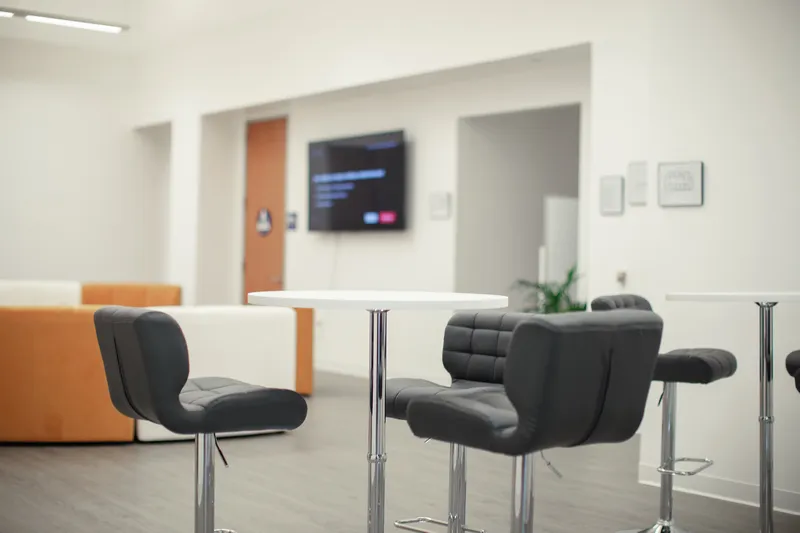
The lounge where clients take breaks between groups at the IOP in Woodland Hills

Who you see in IOP

Doctor
Every week
Therapist
1–2 sessions a week
Case manager
Once a week
Psychiatrist
As needed

Every group is run by a different facilitator. One-on-one sessions are scheduled through your week. Meet some of the team on our homepage.

For your first day

  • Photo ID and your insurance card
  • A list of the medications you take, with doses
  • A notebook for ideas from group and your favorite lines from facilitators

Breakfast and lunch are provided.

05How we treat

The therapy behind each IOP day

Each group uses methods that research supports. Federal researchers name CBT and motivational interviewing as therapies that help people change.
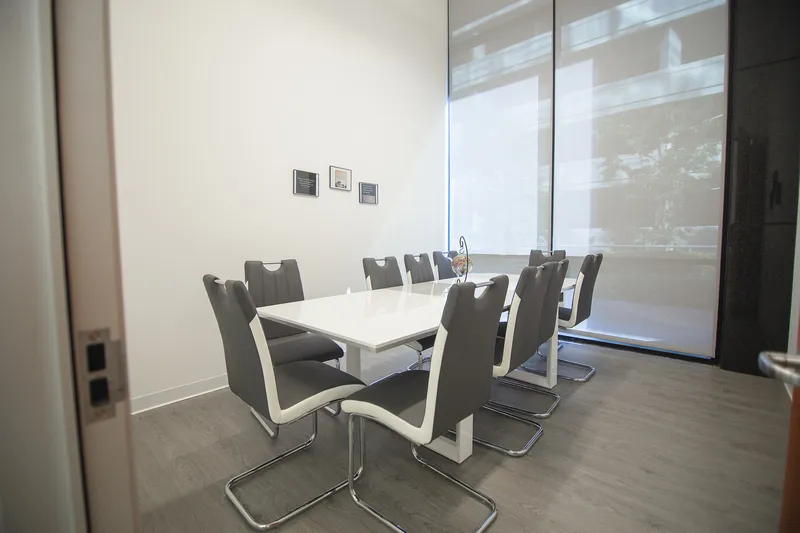
A group room at Arision Treatment Center where IOP groups meet
  • CBTCognitive behavioral therapy

    Spot the thought patterns that lead to using, and practice new ways to respond.

    Research strength5/5

    Tested in dozens of controlled trials for alcohol and drug use. Source: Review in Psychiatric Clinics, 2010

  • DBTDialectical behavior therapy

    Skills for strong emotions, distress and relationships, built one week at a time.

    Research strength3/5

    Strongest for people who also have intense mood swings. Fewer trials for addiction alone. Source: Review in Addiction Science, 2008

  • MIMotivational interviewing

    Conversations that strengthen your own reasons for change, without pressure.

    Research strength4/5

    Many trials. It helps more than no treatment, and works about as well as other therapies. Source: Cochrane review, 2023

  • RPRelapse prevention

    A written plan for triggers, cravings and the high-risk moments you can see coming.

    Research strength4/5

    Well studied, with the clearest results for alcohol use. Source: Meta-analysis, 1999

  • PGProcess groups

    Talk through what’s happening in your life with peers, guided by up to three facilitators.

    Research strength3/5

    Group care does about as well as one-on-one care. Open talk groups are studied less than skills groups. Source: Meta-analysis, 2019

  • 1:1One-on-one therapy

    One or two sessions a week with your therapist. Sessions can run longer when the work calls for it.

    Research strength4/5

    A core part of treatment in federal research. Results depend on the method used. Source: NIDA treatment principles

  • FAMFamily sessions

    Up to once a week when you ask for them, with your consent.

    Research strength4/5

    Strong support for family and couples therapy in addiction care. Source: Research update, 2022

How we rate research strength: 5 means many strong trials; 1 means early research. It describes the studies, not any one person’s results.

While you’re in the program, Arision’s own team gives all of your therapy and medical care. That way, one team owns your plan. If you agree in writing, we share records with your outside doctors. You can go back to them after you finish.

06Medications

Medication is welcome here

If medicine is part of your recovery, you don’t have to give it up for IOP. Medicine for addiction, often called MAT, is allowed when our medical team recommends it.

  • BuprenorphineIncluding Suboxone, and Brixadi, a weekly or monthly injection. For opioid use disorder.
  • NaltrexoneHelps reduce cravings for alcohol and blocks the effects of opioids.
  • AcamprosateHelps people who have stopped drinking stay away from alcohol.
  • Other medicationsOther FDA-approved medications for substance use disorders, when the medical team recommends them.

Psychiatric medication

Tell us every medicine you take, including for mood, anxiety or sleep. Our medical team goes over each one with you. Together, you decide if it still makes sense to keep taking it.

“Taking medication as prescribed is treatment, not a relapse.”

The National Institute on Drug Abuse describes medications for opioid use disorder as safe and effective for many people.

07Mental health

Mental health, treated in the same plan

Anxiety, low mood, trauma and bipolar disorder often show up with drinking or drug use. In IOP, your therapist and psychiatrist treat both in one plan.

The National Institute on Drug Abuse says to treat both together, because each one can keep the other going. Arision is first a program for addiction. If mental health is the main concern and there’s no substance use, our admissions team will point you to a better fit. Read more about our dual diagnosis care.

08Testing & safety

Testing, safety and a sober group

Everyone in IOP takes a drug and alcohol test each week. We also test any time someone may be using, so the group stays safe and sober.

  1. Weekly testing

    Drug and alcohol testing every week, for everyone.

  2. Testing when there’s concern

    If staff see signs of use, they test the same day.

  3. Detox is recommended

    After a positive test, or if you’re intoxicated or withdrawing, our team recommends detox and helps set it up.

  4. A review of what happened

    If the review shows active use and addiction, the client is discharged from IOP. We still help connect them to detox or a higher level of care.

Emergencies: if there’s an overdose, a seizure or talk of self-harm, our staff call 911 or get you to crisis care right away. Anyone can call or text 988 any time.

09Work & school

Work, school and a 9-to-3 program

IOP meets 9am to 3pm on weekdays. Most people with daytime jobs or classes take time off while they attend.

Your job

The federal Family and Medical Leave Act and California’s CFRA may protect your job while you get treatment, if you’re eligible.

Paperwork

Your case manager helps with court letters and forms for work or school. That way, the practical side doesn’t pile up.

Your privacy

HIPAA and 42 CFR Part 2 protect your records. Arision can’t tell your employer or school anything without your written consent.

Many people plan their return to work or school as they step down to outpatient care, which can meet fewer days a week.

10Families

How families stay part of IOP

Families can join a session as often as weekly. It starts with your loved one’s request and a signed consent form.

A mother and her adult son walking arm in arm down a tree-lined street near Woodland Hills

Consent first

Federal privacy law protects substance use treatment records, so our team needs your loved one’s signed consent before sharing details with you.

What helps at home

A method called CRAFT teaches families to reward sober time, let natural results happen and talk at calm moments.

Support for you

Al-Anon and Nar-Anon offer free meetings for families. You can also call our admissions team yourself, any time.

11Cost

What IOP costs with a PPO plan

Arision isn’t in-network with any insurer, and we bill your plan directly. Many PPO plans still cover IOP. Your share is what your plan sets, such as a copay.

PPO plans our clients have used

  • Aetna
  • Anthem Blue Cross
  • Blue Cross Blue Shield PPOs: CA, TX, FL, IL, SC, OK, NC, TN
  • Federal Employee Program (FEP)
  • Cigna
  • UnitedHealthcare
  • Optum · United Behavioral Health
  • UMR
  • Meritain Health
  • GEHA
  • Regence
  • Employer PPO plans

We’re out-of-network with every one of them. Your exact policy decides what’s covered, so we check your benefits for free first. Insurer names are trademarks of their owners.

We can work with

PPO plans with out-of-network benefits. We check your benefits for free before you start and tell you what your plan covers.

We can’t accept

Medicare, Medi-Cal or HMO plans. Medi-Cal members can reach LA County’s substance use line day or night at (844) 804-7500. With no insurance, start at FindTreatment.gov.

A federal parity law says most plans must cover addiction care about as well as other medical care. Your own policy decides what’s covered. That’s why we check first.

12After IOP

What comes after IOP

When you and your team agree you’re ready, you step down to outpatient care if it’s needed. Outpatient care can be one to five days a week, which makes room for work and family.

A client with a backpack and notebook leaving the building at 3pm, heading home after outpatient treatment
Outpatient care: treatment by day, home by evening.

A written plan

Before you finish IOP, you and your therapist write down what comes next, so support doesn’t stop when the schedule lightens.

Alumni support

You can stay connected through Arision’s aftercare and alumni group after your program ends.

Community

Plenty of people add AA, NA or SMART Recovery meetings close to home.

IOP gives you the structure.

The next step keeps it going.

13FAQ

IOP questions, answered

Drawn from what people ask Google about intensive outpatient programs, and from what they ask our team. Tap a topic to jump to it.

Understanding IOP

What is an intensive outpatient program?

An IOP is addiction treatment on a set weekday schedule, and you sleep at home. The letters stand for intensive outpatient program. A national guide from ASAM calls it Level 2.1. It’s a step up from weekly therapy and a step down from partial hospitalization. Groups, one-on-one sessions and lessons on drugs, alcohol and the brain fill most IOP days. At Arision, IOP meets five days a week, 9am to 3pm, in Warner Center. It’s the step after PHP.

How do I know if I need an IOP?

IOP may fit if you’ve finished a higher level of care, your body is stable, and you want a daily routine. It isn’t the right start if you’re in active addiction right now or going into withdrawal. Detox or residential treatment comes first in that case. At Arision, everyone starts in PHP, then steps down to IOP. One call with admissions can tell you if our program fits, or where to start instead.

Is IOP just for addiction?

At Arision, IOP is first about addiction, with mental health care built in. Anxiety, low mood, trauma and bipolar disorder often come with drinking or drug use. So our therapist and psychiatrist treat them in the same plan. The National Institute on Drug Abuse says to treat both together. If mental health is the main concern and there’s no substance use, admissions will point you to a better fit.

Do intensive outpatient programs work?

For many people, yes. A review of IOP studies found results similar to inpatient care for many people. That holds for people who don’t need medical detox or care around the clock. Results vary, and no program can promise one. Staying long enough matters. Most people need at least three months of treatment. That’s why Arision’s path from PHP to IOP to OP usually takes about 90 days.

Is IOP enough, or do I need residential treatment?

Start with detox or residential treatment only if you’re in active addiction or going into withdrawal. That means you’re still using regularly, or your body reacts when you stop. If you’ve stopped using and your body is stable, outpatient care like IOP can work well. Our admissions team will tell you honestly which level fits, even when it’s another program.

Schedule & how it works

How many hours a day is IOP?

At Arision, IOP meets from 9am to 3pm, Monday through Friday. The day includes a morning group, a short break, a second group, lunch and an afternoon process group. Hours vary between programs, so ask any IOP you’re considering for its exact schedule. Ours matches PHP, so the routine you’ve built doesn’t change when you step down.

How long does IOP last?

IOP at Arision typically lasts about 30 days. It’s the middle step of a path that usually runs about 90 days: roughly 30 days of PHP, 30 days of IOP, then about 30 days of outpatient care if it’s approved and needed. Your progress decides when you move, not the calendar. Insurers sometimes review how long care lasts, and we handle that with you.

What comes first, PHP or IOP?

At Arision, PHP comes first. Everyone starts in partial hospitalization, the most structured level, and steps down to IOP when they’re steadier. Most people do go on to IOP, because stepping down gradually keeps support in place. If things get harder, your team can move you back up for a while. After IOP, some people continue in outpatient care, which meets one to five days a week.

Do I have to talk in group therapy?

No one will force you to share. Many people mostly listen in their first few groups, and that’s okay. Facilitators invite you in gently, and you choose how much to say. Over time, hearing others describe the same struggles often makes it easier to speak up. If something feels too personal for group, you can bring it to your one-on-one therapy session instead.

Can I keep seeing my own therapist during IOP?

Not while you’re in the program. At Arision, our own team gives your therapy, psychiatry and medical care during PHP, IOP and OP. That way, one team owns your plan. If you agree in writing, we can share records with your outside therapist or psychiatrist. You can go back to them after you finish.

What should I bring on my first day?

Pack your photo ID, your insurance card and a written list of your medicines and doses. A notebook helps too. Many clients use one to jot down ideas from group and their favorite lines from facilitators. Breakfast and lunch are provided, so you don’t need to pack meals. Most of all, bring yourself and a willingness to take part.

Medications, testing & safety

Can I take Suboxone or other MAT while in IOP?

Yes, when Arision’s medical team recommends it. Medicines for opioid and alcohol use are welcome here. That includes buprenorphine, such as Suboxone or the Brixadi shot, plus naltrexone and acamprosate. Our medical team reviews what you take and plans your care around it. They’ll also go over any mental health medicine with you, to make sure it still makes sense.

Are you considered sober if you’re on Suboxone?

Taking a medicine like buprenorphine as prescribed is treatment, not a relapse. The National Institute on Drug Abuse says medicines for opioid use disorder are safe and work well for many people. SAMHSA lists them as a standard treatment. Recovery means your health and your life getting better. Medicine can be part of that.

Do IOP programs drug test?

Many do, and Arision does. Everyone in IOP is tested weekly, and the tests include alcohol. We also test whenever there’s reason to think someone is using. Testing keeps the group a safe, sober space and gives your team honest information for planning your care.

What happens if you fail a drug test in IOP?

Our team recommends going back to detox, and we look into what happened. If you’re intoxicated or going into withdrawal, detox comes first, and we help set it up. We never keep someone in group while they’re using, because every client deserves a safe, sober space. If the review shows you were using and are in active addiction, you’ll be discharged from IOP. Even then, we help connect you to detox or a higher level of care.

Work, cost & privacy

Can you work while in IOP?

Most people with weekday jobs take time off, because Arision’s IOP meets 9am to 3pm, Monday through Friday. The federal Family and Medical Leave Act and California’s CFRA may protect your job while you get treatment, if you’re eligible. Your case manager can help with paperwork for work. A lot of people time their return to work with the move to outpatient care, which can mean fewer days a week.

Will my insurance cover an IOP?

Many PPO plans cover out-of-network intensive outpatient care, but every plan is different. Arision isn’t in-network with any insurer and sends the bill to your plan. You pay only what your plan sets as your share, like a copay. Medicare, Medi-Cal and HMO plans aren’t accepted. Call or send the form for a free benefits check, and we’ll tell you what your plan covers before you start.

Is IOP free if I don’t have insurance?

Not at Arision, because we work only with PPO plans that include out-of-network benefits. If you have Medi-Cal, LA County’s Substance Abuse Service Helpline at 844-804-7500 connects you to covered care, 24 hours a day. With no insurance, FindTreatment.gov and SAMHSA’s free helpline at 1-800-662-4357 can point you to low-cost or free programs near you.

Is IOP confidential?

Yes. Two federal rules protect your records. One is HIPAA. The other, 42 CFR Part 2, is stricter and covers addiction care. Arision can’t say you’re a client unless you agree in writing. We also can’t share details with your job, school or family. Rare exceptions include a medical emergency.

For families

How can family help someone in IOP?

Stay connected without taking over. Ask how the day went, keep plans that support a sober routine, and look after your own health too. Weekly family sessions are available if your loved one requests them and signs consent. Approaches like CRAFT teach families to reward sober time and talk at calm moments. Al-Anon and Nar-Anon offer free support for you.

Why does family involvement matter in treatment?

Addiction affects the whole family, and recovery happens at home too. Family sessions can rebuild trust, set clear limits, and help everyone handle hard moments the same way. Research on family methods like CRAFT shows families can help a loved one start and stay in treatment. Even if your loved one isn’t ready for family sessions, getting support for yourself still helps.

Can I make my adult child go to treatment?

In California, adults generally can’t be required to attend outpatient treatment. What you can do is learn the options, choose a calm moment to talk, and stop covering for the effects of their use. You can also call Arision’s admissions team yourself, before your loved one agrees to anything. If they’re in danger, call 911. For thoughts of suicide, call or text 988.

After IOP

What’s the next step after IOP?

For many people, it’s outpatient care (OP), which meets one to five days a week. Before you finish IOP, you and your therapist write a plan for what comes next. That can include OP, Arision’s alumni group and community meetings such as AA, NA or SMART Recovery. The goal is to keep support in place as daily structure lightens.

Where is Arision’s IOP, and who does it serve?

Arision’s IOP is in Warner Center, at 21600 Oxnard Street, Suite 270, in Woodland Hills. It’s near the 101 and Topanga Canyon Boulevard. We serve adults 18 and older across the west San Fernando Valley and Conejo Valley. That includes Woodland Hills, Tarzana, Calabasas, West Hills, Canoga Park, Encino and Agoura Hills.

14Contact

Questions about IOP? Ask us anything

Call about your own situation or about someone you love. There’s no cost, no pressure, and the call stays private.

Admissions · day or night

(747) 320-9575

In an emergency, call 911.

In a mental health crisis, call or text 988 any time.

This page shares general information, not medical advice.